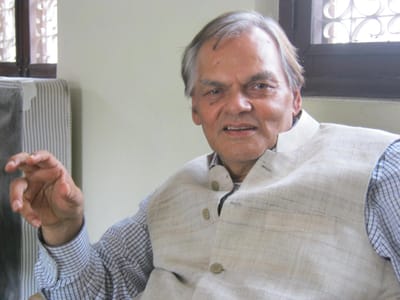
Started as a teacher, stayed a democrat
Schools, courtrooms, jail cells and a Cabinet table: the four places Joshi's public life has been made.
Schools before office
Joshi was born in 1949 in Khalte village, in Rupakot, Tanahun. He entered politics in 1964, at the start of his student years, and names B. P. Koirala as his ideal. In 1966 he led the independent students' union at the Education campus in Kirtipur, and in 1967 the Gandaki Students' Union in Kathmandu.
He built schools before he held office. He founded Tribhuwan Secondary School in his home district and served as its founding headmaster, teaching as a volunteer for six years and spending his own money to establish it. He later became headmaster of Shiva Secondary School in Rising, and founded Adikavi Bhanubhakta Multiple Campus in Tanahun, where he also taught without pay for two years.
Law and the struggle for democracy
Joshi studied law and practised for twelve years. He served as president of the Nepal Bar Association in Tanahun and vice-president of its Western Regional Court unit in Pokhara, and led Amnesty International's Tanahun group.
His politics cost him his freedom more than once. Across the campaigns against the Panchayat system, from the multiparty campaign to the People's Movement of 1990, he was jailed on and off for a total of three and a half years.
Inside the party
Joshi joined Tarun Dal, the Nepali Congress youth wing, in 1969 and formed the party's Tanahun district committee, serving as its secretary from 1976. He reached the central committee in 1997 and later served as joint general secretary. He also coordinated construction of the party headquarters at Sanepa, Lalitpur.
After the royal takeover, with senior leaders in custody, he announced the Nepali Congress protest programmes. He is credited with shaping the basic concept of the five-party alliance and with travelling to Delhi to open formal talks with the Maoists.